2-Layer vs 3-Layer Engineered Oak Flooring |
← |

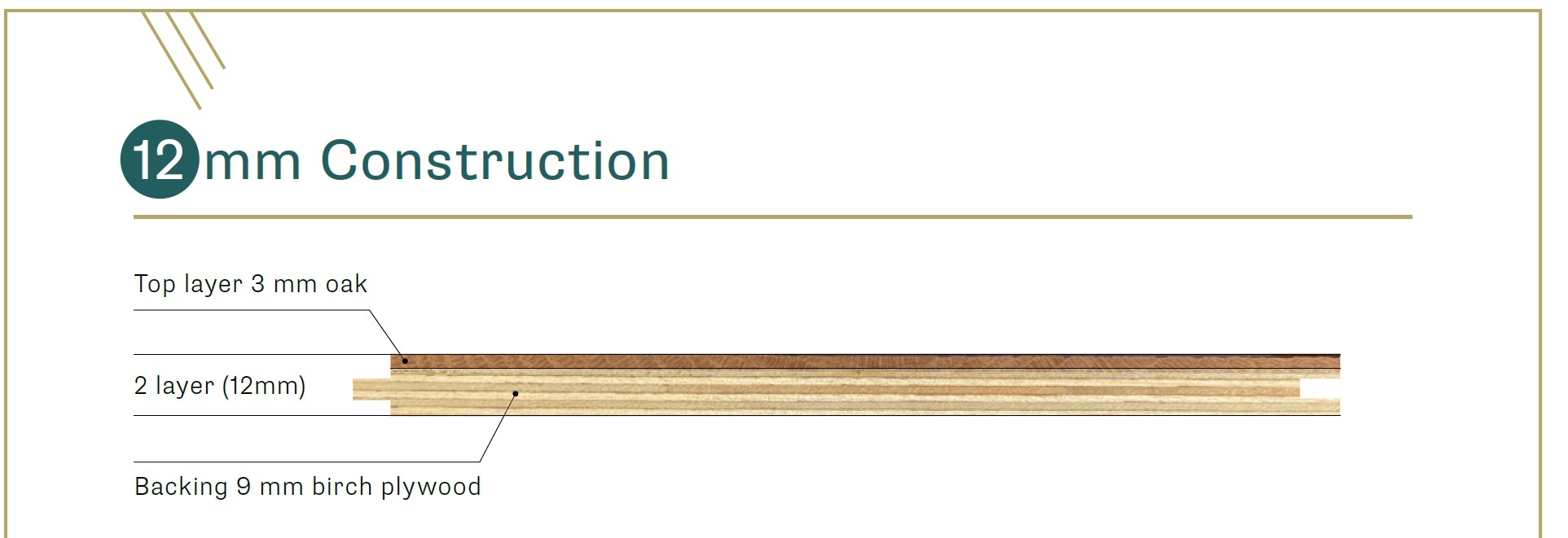
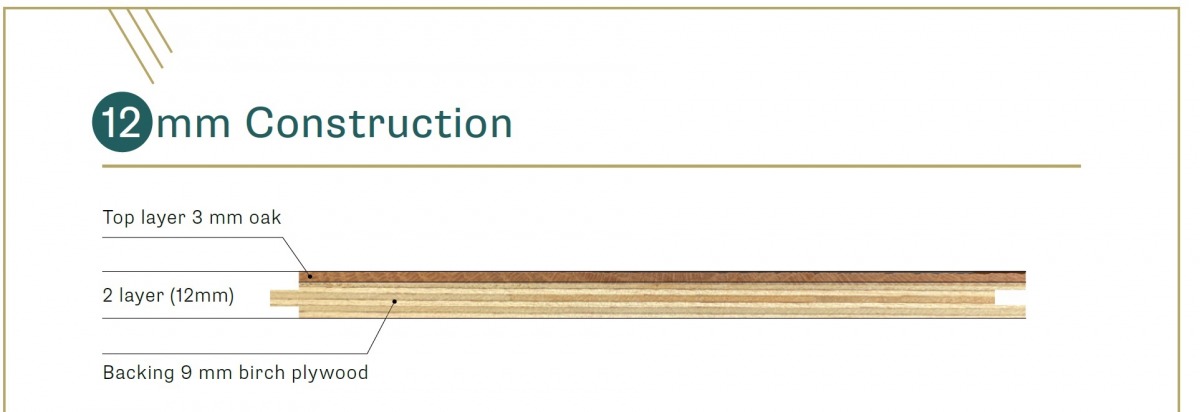
The main difference between 2-layer and 3-layer engineered oak is what sits beneath the oak wear layer: a 2-layer board bonds solid oak directly to a single stable birch plywood base and is glued down, while a 3-layer board adds a crosswise middle core between the oak top and a backing veneer and is usually a click board for floating installation. Both constructions are dimensionally stable and suitable for underfloor heating — the right choice depends on width, installation method, budget and project type rather than on layer count alone.
Short answer for specifiers: choose 2-layer for made-to-order pattern floors and wide planks (up to 300 mm), glued to screed; choose 3-layer for a more economical, click-together floor in standard widths (up to 180 mm) and a finished colour. A floor can only be resanded if it is glued down and has enough oak wear layer — a floating click floor cannot be properly refinished.
A 2-layer engineered oak board is built from a solid European oak wear layer bonded to a birch plywood base. Birch plywood is used because it resists internal stress and limits the movement that affects solid wood when humidity and temperature change. The result is a stable board that keeps the look of real oak while performing reliably over underfloor heating and across large floor areas. It is normally glued down to screed or plywood and is the construction used for bespoke, made-to-order parquet — including wide planks up to 240, 270 and 300 mm.
The oak wear layer determines how many times the floor can be sanded and refinished:
| Total board thickness | Oak wear layer | Typical use |
|---|---|---|
| 12 mm | 3 mm | Apartments and residential spaces |
| 15 mm | 3.5 mm | Standard residential flooring |
| 18.5–20.5 mm | 5.5 mm | Long-term and commercial projects |
This is the construction PerfektoWood uses for its made-to-order boards in chevron, herringbone and plank formats, as well as its wide-plank engineered oak. For the full technical breakdown, see the engineered oak parquet construction guide.
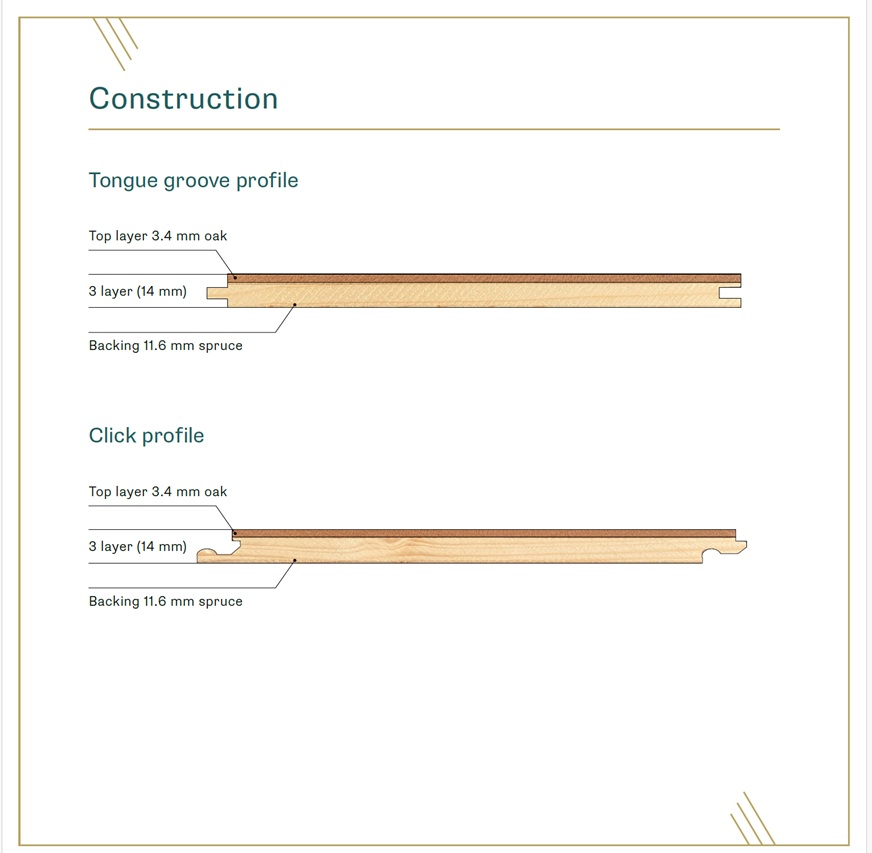
A 3-layer engineered oak board adds a third element to the structure. Between the solid oak top layer and a thin backing veneer sits a middle core — typically softwood lamellas laid crosswise to the top layer — which counteracts movement in two directions. PerfektoWood’s 3-layer boards are supplied as a finished, ready-to-lay floor with a click (locking tongue-and-groove) system for floating installation, which makes them faster to lay and more economical than bespoke, glued-down parquet. They are produced in standard widths up to 180 mm.
PerfektoWood’s 3-layer engineered oak collection is offered in a range of finished colours — from lighter tones through to deeper, warmer shades — supplied as ready-to-lay click boards and engineered for stability under underfloor heating. It is the more cost-effective route where a finished colour and quick floating installation are wanted. If you need a wider board, that is produced on the 2-layer birch plywood construction instead.
| Feature | 2-Layer | 3-Layer |
|---|---|---|
| Structure | Oak wear layer + birch plywood base | Oak top + crosswise middle core + backing veneer |
| Typical format | Chevron, herringbone, boards, wide planks — made to order | Finished-colour planks — ready to lay |
| Available width | Up to 240 / 270 / 300 mm (wide planks) | Up to 180 mm |
| Installation | Glue-down to screed or plywood | Click system — floating |
| Cost & supply | Made to order — typically higher | Finished click collection — more economical |
| Stability | Very high | Very high — crosswise core |
| Underfloor heating | Suitable | Suitable |
| Refinishing | Yes — glued down; depends on wear layer (3–5.5 mm) | Only if glued down; limited when floated |
| Best for | Pattern floors, wide planks, bespoke dimensions | Economical finished floors, quick floating installation |
Two conditions decide refinishing: the floor must be glued to the subfloor, and it must have enough oak wear layer. A floating click floor cannot be properly resanded, so if refinishing matters, specify a glued-down installation and a thicker wear layer.
Still deciding? Both constructions are made in-house. Request physical samples of the exact board — construction, grade, colour, width and wear layer — before you commit. Ask for samples.
PerfektoWood manufactures engineered oak parquet in Lithuania and supplies distributors, architects and construction companies across Europe. Both constructions are available:
A 2-layer board bonds a solid oak wear layer directly to a single stable birch plywood base and is usually glued down. A 3-layer board adds a crosswise middle core between the oak top and a backing veneer and is usually supplied as a click board for floating installation. Both reduce wood movement compared with solid oak; they differ mainly in available widths, installation method and price.
3-layer engineered oak is generally the more economical option. It is supplied as a finished collection with a click system for floating installation, while 2-layer boards are made to order in bespoke patterns and dimensions, which typically costs more. The best value depends on the format and wear layer your project needs.
At PerfektoWood, wide planks are built on the 2-layer birch plywood construction and are available up to 240, 270 and 300 mm. The 3-layer collection is produced in standard widths up to 180 mm. So if you need a genuinely wide board, that is a 2-layer product, not 3-layer.
Both 2-layer and 3-layer engineered oak are suitable for underfloor heating, because their layered construction limits expansion and contraction. A 2-layer board is usually glued down and a 3-layer click board floated; in both cases controlled acclimatisation and a compatible adhesive or underlay matter more than layer count.
Sanding and refinishing require the floor to be glued down to the subfloor and to have enough oak wear layer left. A glued 2-layer board can be sanded several times depending on its wear-layer thickness (3–5.5 mm). A 3-layer board installed as a floating click floor generally cannot be fully resanded — to keep the option to refinish it, it should be glued down rather than floated.
For high-traffic and long-term commercial floors, prioritise a thick oak wear layer (for example 5.5 mm on an 18.5–20.5 mm board) and a glued-down installation so the floor can be refinished several times, and choose the format and width your design needs. Both 2-layer and 3-layer constructions can meet commercial requirements.
Yes. PerfektoWood produces made-to-order 2-layer boards in chevron, herringbone, plank and wide-plank formats (up to 300 mm), and a more economical 3-layer engineered oak click collection in finished colours with widths up to 180 mm. Both are manufactured in Lithuania and suitable for underfloor heating.
Contact us for wholesale pricing, technical specifications or samples, or see our completed projects across Europe.
| ↑ | ← |
| © MB " Perfekto wood" All rights reserved. | Email: info@perfektowood.lt | Mob.: +37065533736 |
|